Colors
 Support


In this article, we will explore the Islamic Calendar 2025 detailing the months, key Islamic events such as Ramadan, Eid ul-Fitr, Eid ul-Adha, and how the Islamic months align with the Gregorian calendar. Whether you’re planning for Ramadan 2025 or simply want to learn more about the Islamic months, this guide will provide you with everything you need to know.
Introduction
The Islamic Calendar, also known as the Hijri Calendar, is a lunar calendar used by Muslims around the world to determine the dates of religious observances, festivals, and important events. Unlike the Gregorian calendar, which is solar-based, the Islamic calendar follows the phases of the moon, making each year about 10-12 days shorter than the Gregorian year.
In this article, we will explore the Islamic Calendar for 2025, detailing the months, key Islamic events such as Ramadan, Eid ul-Fitr, Eid ul-Adha, and how the Islamic months align with the Gregorian calendar. Whether you’re planning for Ramadan 2025 or simply want to learn more about the Islamic months, this guide will provide you with everything you need to know.

How the Islamic (Hijri) Calendar Works
The Islamic Calendar is based on the cycles of the moon. Each month begins with the sighting of the new moon, which can vary by location, making the actual dates of Islamic events shift annually in the Gregorian calendar.
Structure of the Islamic Calendar
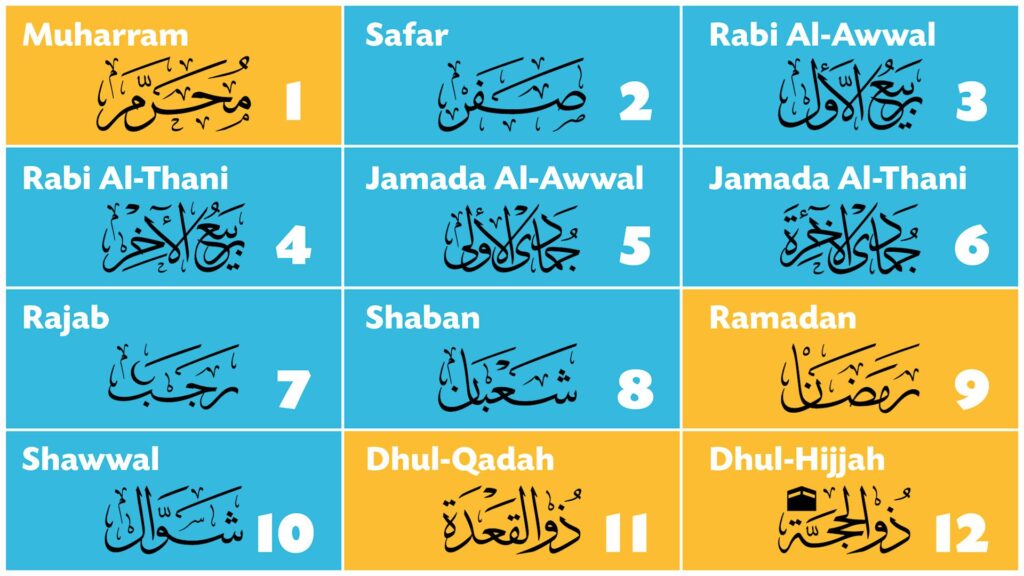
- Months: The Islamic calendar comprises 12 months, which include:
- Muharram
- Safar
- Rabi’ al-Awwal
- Rabi’ al-Thani
- Jumada al-Awwal
- Jumada al-Thani
- Rajab
- Sha’ban
- Ramadan
- Shawwal
- Dhu al-Qi’dah
- Dhu al-Hijjah
- Lunar Basis: The Islamic calendar is shorter than the Gregorian calendar by about 10 to 12 days, which causes Islamic months to cycle through the seasons over time.
How the Islamic Calendar 2025 Months Align with the Gregorian Calendar
To help you plan for Islamic events and understand how the Islamic months correspond to the Gregorian calendar, here’s a table showing the Islamic months for the year 2025, alongside their corresponding Gregorian dates.
| Islamic Month | Islamic Year | Gregorian Start Date | Gregorian End Date |
|---|---|---|---|
| Muharram | 1447 | July 7, 2025 | August 5, 2025 |
| Safar | 1447 | August 6, 2025 | September 4, 2025 |
| Rabi’ al-Awwal | 1447 | September 5, 2025 | October 4, 2025 |
| Rabi’ al-Thani | 1447 | October 5, 2025 | November 3, 2025 |
| Jumada al-Awwal | 1447 | November 4, 2025 | December 3, 2025 |
| Jumada al-Thani | 1447 | December 4, 2025 | January 2, 2026 |
| Rajab | 1447 | January 3, 2026 | January 31, 2026 |
| Sha’ban | 1447 | February 1, 2026 | March 2, 2026 |
| Ramadan | 1447 | March 3, 2026 | March 31, 2026 |
| Shawwal | 1447 | April 1, 2026 | April 30, 2026 |
| Dhu al-Qi’dah | 1447 | May 1, 2026 | May 29, 2026 |
| Dhu al-Hijjah | 1447 | May 30, 2026 | June 27, 2026 |
Important Dates in the Islamic Calendar 2025
Here are some key dates to remember during the Islamic Calendar year of 2025:
- 1 Muharram (Islamic New Year): July 7, 2025
- 12 Rabi’ al-Awwal (Mawlid – Birth of the Prophet Muhammad): September 27, 2025
- 1 Ramadan (Start of Ramadan): March 11, 2025
- 1 Shawwal (Eid al-Fitr – Celebration of Breaking the Fast): April 10, 2025
- 10 Dhu al-Hijjah (Eid al-Adha – Festival of Sacrifice): June 17, 2025
Cultural Significance of Key Dates
- Islamic New Year: A time for reflection and setting new intentions for the coming year.
- Mawlid: Celebrates the birth of the Prophet Muhammad, highlighting his teachings and the values of Islam.
- Ramadan: A month dedicated to fasting, prayer, and community engagement, it is a time for spiritual growth and self-discipline.
- Eid al-Fitr: A festive occasion marking the end of Ramadan, celebrated with prayers, feasts, and charitable giving.
- Eid al-Adha: Commemorates the willingness of Prophet Ibrahim to sacrifice his son in obedience to God, emphasizing themes of sacrifice and charity.
Conclusion: Islamic Calendar 2025
The Islamic Calendar for 2025 is filled with significant religious observances that hold deep meaning for Muslims around the world. From the blessed month of Ramadan to the celebrations of Eid ul-Fitr and Eid ul-Adha, each event is a time for devotion, community, and spiritual reflection.
By understanding the lunar calendar and its alignment with the Gregorian system, Muslims can prepare for these important dates and honor the traditions and teachings of Islam.
As the Islamic year progresses, staying informed about the changing moon phases and the significance of each month ensures that Muslims can fulfill their religious obligations and deepen their connection with their faith in 2025.
Post a comment
Related Posts

January 23, 2025
Forced Marriage in Islam: A Misunderstood Concept
Forced marriage is a subject often misunderstood and misrepresented in discussions about Islam. Contrary to…

January 21, 2025
Prophet Lut: His Story, Lessons, and Divine Punishment
Prophet Lut: Lessons from His Life and the Story of Sodom and Gomorrah The story…

January 8, 2025
Quran Says Muhammad is the Prophet of All Mankind
The message of Islam, as conveyed by Prophet Muhammad (peace be upon him), is not…